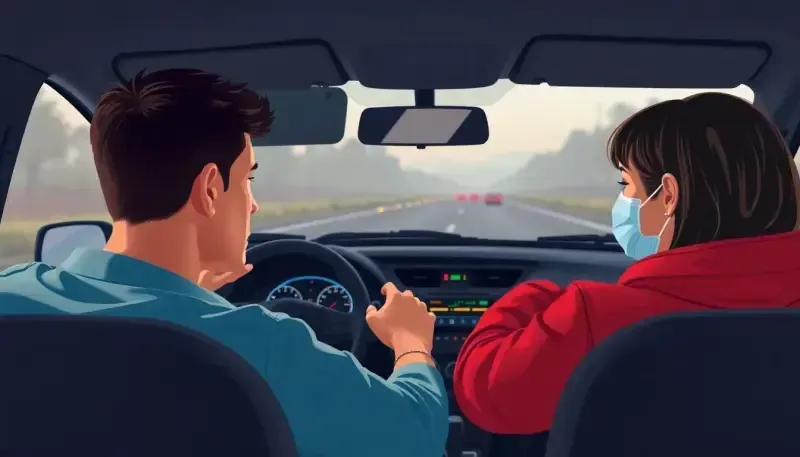
Drowsy driving is a significant yet often overlooked danger on the roads, comparable to driving under the influence of alcohol. Unlike alcohol, which can be measured with a breathalyzer, the effects of fatigue are more insidious and difficult to quantify. The reality is that drowsiness can severely impair judgment, reaction time, and overall driving ability, leading to catastrophic consequences.
Statistics reveal the alarming scope of this issue: approximately 70% of adult drivers, or about 170 million people, admit to driving while drowsy. Shockingly, nearly 40% have confessed to actually falling asleep at the wheel. The numbers continue to escalate, with:
- Nearly 13% of drivers reporting they doze off while driving at least once a month.
- 4% indicating they feel drowsy during every driving session.
- Government estimates suggesting that around 100,000 crashes are directly attributed to drowsy driving.
- Drowsy driving incidents resulting in 71,000 injuries, approximately 1,600 fatalities, and economic losses exceeding $13 billion annually.
These figures likely underestimate the problem, as self-reported data can be unreliable and law enforcement lacks consistent methods for identifying drowsy driving incidents. In countries such as those in Europe and Australia, which have more standardized reporting practices, nearly 30% of accidents have been linked to drowsy driving.
Moreover, driving while drowsy can exacerbate the effects of alcohol, leading to an increase in accidents associated with impaired judgment. Fatigue has been shown to be a contributing factor in over one million incidents related to drunk driving.
The hidden dangers of drowsiness while driving
Feeling sleepy while driving can be just as dangerous as actually falling asleep. Drowsiness impacts driving abilities in multiple ways, such as:
- Reducing attention and increasing the likelihood of missing crucial traffic signals.
- Delaying reaction times and heightening the chances of making critical errors, like pressing the accelerator instead of the brake.
- Limiting the capacity to make quick, effective decisions in response to changing road conditions.
Identifying high-risk groups
Certain categories of drivers are particularly prone to drowsy driving, including:
- Commercial drivers who often work extended shifts.
- Individuals suffering from sleep disorders, such as insomnia or sleep apnea.
- Shift workers or those with non-traditional hours.
- People taking medications that cause drowsiness, including antihistamines and some pain relievers.
- Drivers who do not achieve the recommended amount of sleep—at least 8 hours per night.
Young adults, especially men, are also at a heightened risk. Studies reveal that men are twice as likely to fall asleep at the wheel compared to women. Additionally, younger drivers aged 18 to 29 are more susceptible to drowsy driving than older adults. Research indicates that those who sleep only 6 to 7 hours a night face double the risk of drowsy driving-related accidents compared to those who sleep 8 or more hours.
Furthermore, individuals who sleep less than 5 hours per night are 4 to 5 times more likely to be involved in an accident.
The consequences of sleep deprivation extend beyond just accidents. A significant number of drivers report feeling stressed by traffic, with:
- 42% indicating they feel stressed due to regular road conditions.
- 32% admitting that sleepiness leads to impatience.
- 12% noting that they tend to drive faster than necessary when tired.
Despite these alarming statistics, only 22% of drivers say they pull over to rest when they notice signs of drowsiness. The most dangerous period for drowsy driving is between 4 AM and 6 AM, and rural highways are typically more hazardous. However, urban drivers are more likely to fall asleep while driving than those in rural areas.
The serious ramifications of drowsy driving
The legal consequences of drowsy driving can be severe, often comparable to those of driving under the influence. Accidents that result in serious injuries or fatalities can lead to imprisonment for the driver. Additionally, victims of these accidents may receive substantial compensation, and businesses may face liability for accidents caused by their employees driving while drowsy.
Understanding the effects of sleep deprivation
Research shows that being awake for 18 hours can impair cognitive functions to a level comparable to having a blood alcohol concentration (BAC) of 0.05%. After 24 hours without sleep, the impairment can reach a BAC of 0.10% or higher. Even minimal alcohol consumption can significantly amplify the effects of sleep deprivation.
Recognizing the signs of drowsiness
It’s crucial to be aware of the warning signs indicating that you may be too drowsy to drive:
- Frequent yawning and blinking due to eye heaviness.
- Inability to recall the last few miles driven.
- Missing exits or turns.
- Hitting road dividers or rumble strips.
- Sudden and unintentional lane changes.
- Ignoring traffic signals.
Common but ineffective strategies to combat drowsiness
Many drivers resort to ineffective methods to stave off sleep, such as:
Caffeine: While a cup of coffee may provide a temporary boost, its effects are short-lived and often lead to a crash once the caffeine wears off.
Exposure to sunlight: Some drivers believe that opening a window or sunroof helps, but this may not work for those whose sleep schedules are disrupted.
Lowering the temperature: Although some find that a cooler vehicle helps, it can backfire in hot weather, leading to increased drowsiness.
Unconventional strategies among younger drivers: Many young drivers engage in distracting activities, like eating or blasting loud music, which can further reduce their focus on the road.
On a more positive note, a significant number of drivers report pulling over to rest or switching seats with a passenger when they feel fatigued, which can help improve alertness.
Effective prevention strategies for drowsy driving
To reduce the risk of drowsy driving, consider implementing the following strategies:
- Rest before a long trip; aim for at least 8 hours of sleep.
- Take breaks every 100 miles or two hours.
- Avoid driving after heavy meals, which can induce sleepiness.
- Try to drive with a companion to stay engaged and alert.
- Plan travel during daylight hours, if possible, and avoid driving late at night.
- Be wary of medications that can cause drowsiness before getting behind the wheel.
Driving while drowsy poses a threat not only to the driver but also to other road users. If you or someone you know has been injured in an accident due to drowsy driving, it’s crucial to seek the guidance of a legal professional experienced in handling personal injury cases.
Taking proactive steps can save lives and prevent avoidable tragedies on the roads.